 14 km
14 km 




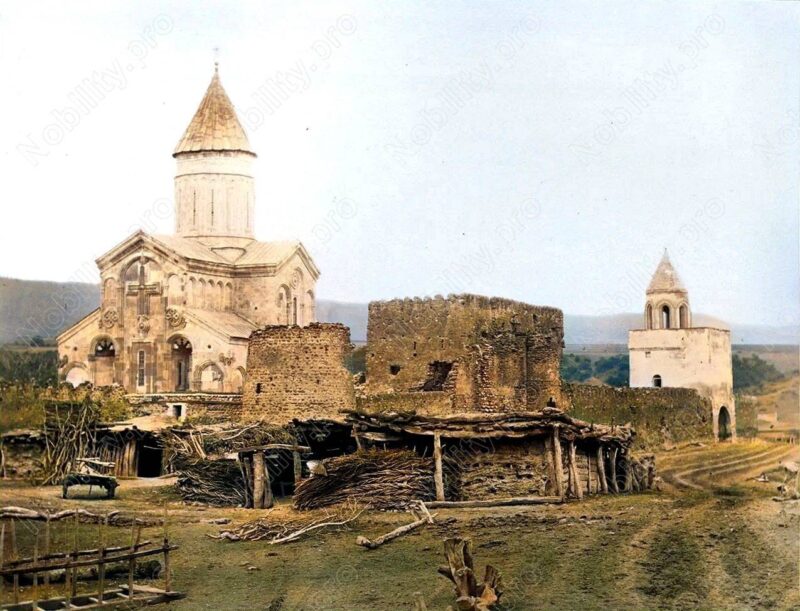







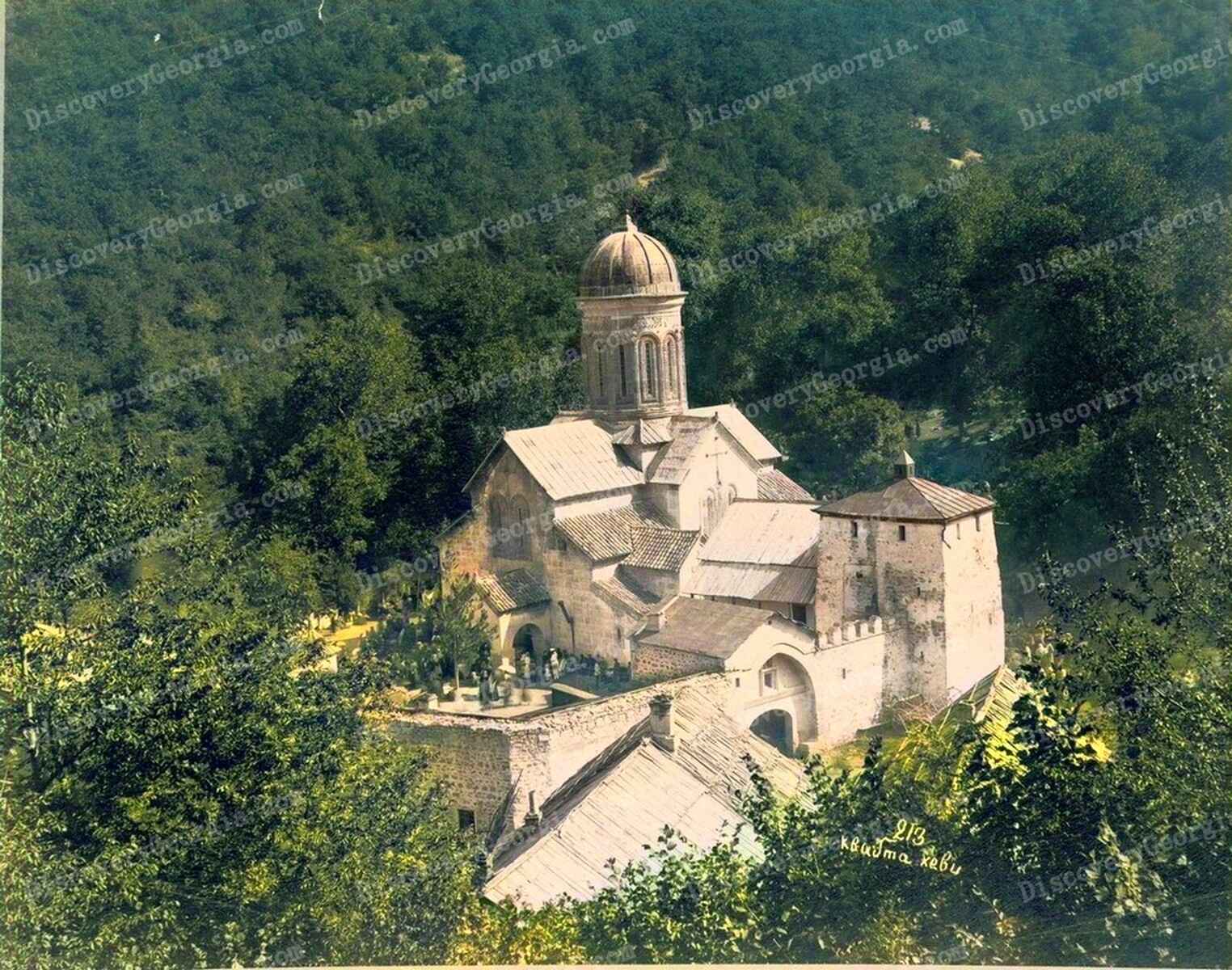
Manglisi Sioni Cathedral, one of Georgia’s oldest churches, was built in the 4th century by order of the Roman Emperor Constantine the Great — the founder of Constantinople, the future capital of the Byzantine Empire — as a gift to the newly Christianized Kingdom of Iberia and its king. The emperor also presented the king with sacred relics of the Holy Cross, including a fragment of the Cross on which Jesus Christ was crucified and the Nail used in the Crucifixion of Christ. In honor of this gift, the church was dedicated to the Holy Cross.
The cathedral is located in Tetritskaro Municipality, 60 kilometres from Tbilisi. The road leading there winds through breathtaking natural scenery, rising to an elevation of 1,200 metres above sea level.
Manglisi Church of that period was rather small in size: from four to twelve square metres. Catholicos Arsen, a historian of the 10th century, tells us: “Only preachers were admitted to the church, while the believers stood praying in the open.”
In the 5th century, the Georgian Church attained autocephaly. Existing small churches no longer met the increasing needs, and therefore it became necessary to build churches of larger capacity to accommodate believers. In the last third of the 5th century, a tetraconch-type church was built in Manglisi instead of the existing smaller one. In this form, the church existed until 1020.
At the beginning of the 11th century, the unification and strengthening of Georgia marked a new period of prosperity, which was reflected both in the architecture of that time and in the renovated Manglisi Church of 1020–1027.
A new type of dome — tall and twelve-sided — replaced the old one. Portals decorated with highly artistic ornaments were added to the western and southern sides. During the same period, inscriptions of great historical value were created, while the interior of the church was decorated with magnificent frescoes.
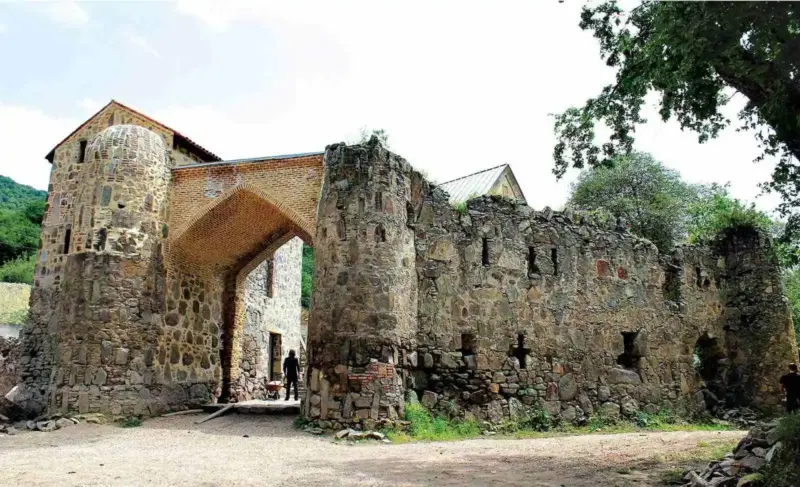
Later, this richly decorated church was repeatedly damaged. In the 17th century, it was repaired and surrounded by a high wall with several towers. In the 1850s, the church underwent another thorough restoration. According to records from this period, the sacred relics — the fragment of the Cross and the Nail used in the Crucifixion of Christ — were removed from the church and were kept in the Moscow Armoury.
The church bell tower was built in 1852 under the supervision of Ensign Ponomarev, through the efforts of the officers and personnel of the Life Grenadier Erivan Regiment, with the assistance of the regiment’s commander, General Prince Golitsyn II.