 8 km
8 km 

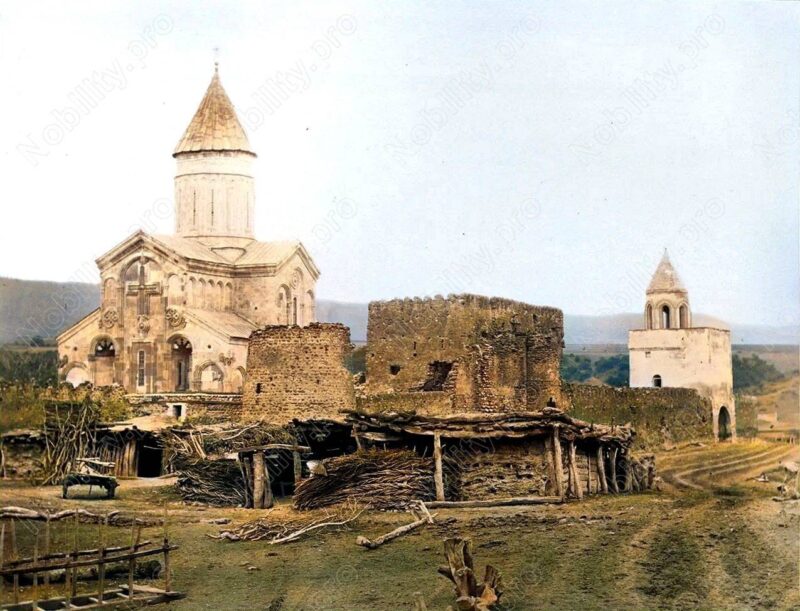

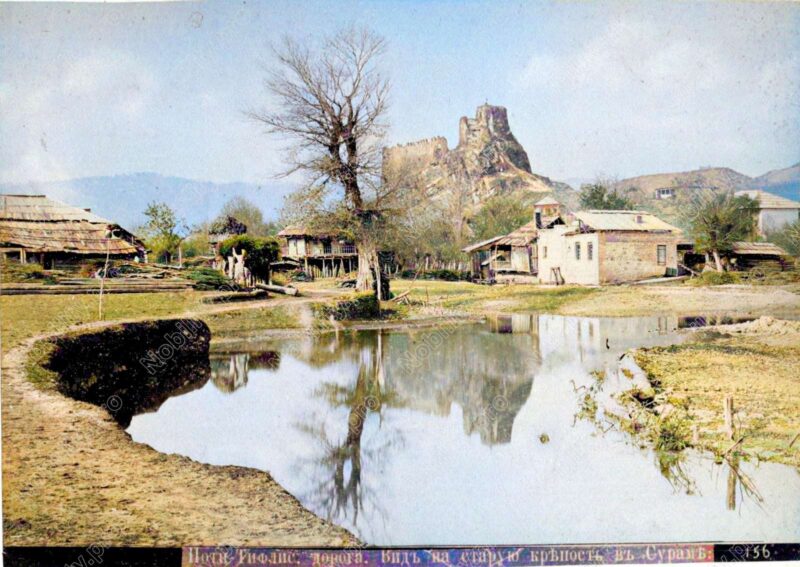


Gori Fortress — an ancient fortress stands on a hill in the center of the city of Gori, on the banks of the Liakhvi River, which proudly overlooks the elegant city and the picturesque valleys and mountains of Kartli, making it one of the favorite destinations for travelers and adventurers.
Gori Fortress origins date back to the first half of the 1st millennium BC. Located at the strategic intersection of ancient routes connecting East and West, as well as North and South, the fortress preserves traces of different historical periods. In 1946, a landslide on the northern slope of the hill revealed a remarkable section of ancient dry-stone masonry dating to the final centuries of the 1st millennium BC. The preserved wall from this early period is three meters thick.
Gori Fortress complex includes the citadel, the “Tskhrakara” section — the western fortified part of the fortress, whose name literally means “Nine Gates” — and the fortress church.
Citadel walls follow the natural relief of the cliffs. To strengthen the structures, buttresses were added at various times.
“Tskhrakara” is a stepped system with towers, where the lower floors served as living quarters, while the upper ones were used for defense. The fortress had a well-designed water supply system: an internal reservoir and an underground tunnel leading to the river at the foot of the hill.
In the eastern part of the complex, a small hall-type church from the 11th–12th centuries has been preserved, built of hewn stone, featuring fragments of decorative arches and frescoes.
Most of the modern fortifications were built in the 17th century under King Rostom, as confirmed by the sketches of the Italian missionary Cristoforo de Castelli. During Rostom’s reign, a palace with a garden, flowerbeds, and a pool was also built within the fortress. The main southern entrance is adorned with a tower featuring pointed arches and ornate brickwork from the same era.
In 1772, deep, water-filled moats were added around the fortress for protection. In 1774, King Erekle II carried out a major reconstruction, adding a second tier of walls and equipping the citadel with cannons. The structure we see today is largely his work. Russian Colonel Burnashev noted that its position and defenses made the fortress nearly impregnable, even for the best European armies of that era, though no traces of the moats remain visible today.
Over the centuries, Gori Fortress has witnessed numerous wars, facing invasions from the Mongols under Tamerlane (Timur the Lame), Persians, Ottomans, and others. It was constantly subjected to raids and changed hands multiple times between local rulers and foreign empires, remaining a key defensive stronghold. The architecture of the fortress is entirely subordinated to defense, and the austere silhouette of its walls emphasizes the impregnability of this citadel in the Shida Kartli region.
After exploring the fortress, you can enjoy a meal or a coffee at the nearby cafes and restaurants located in the city center—such as Shin da Gori, Kera, or Weimar Gori—where you can experience traditional Georgian cuisine just a short walk from the citadel.