 1 km
1 km 










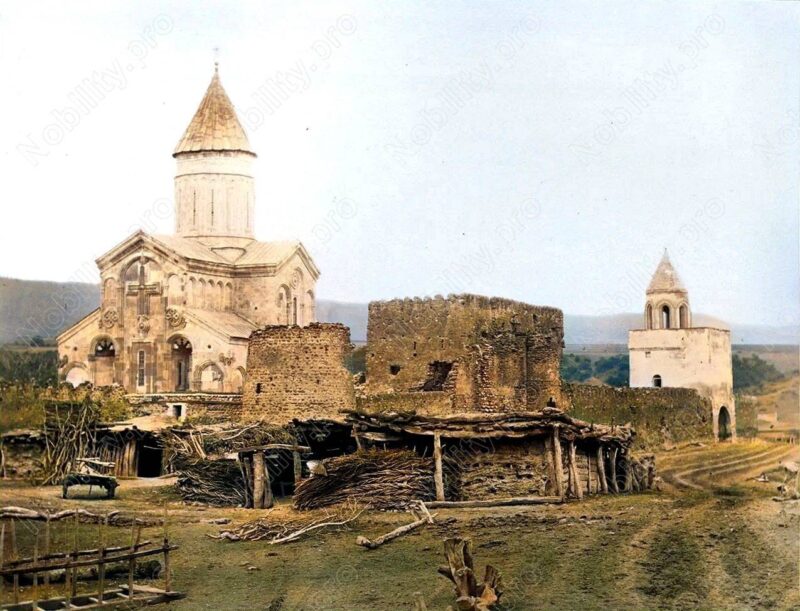

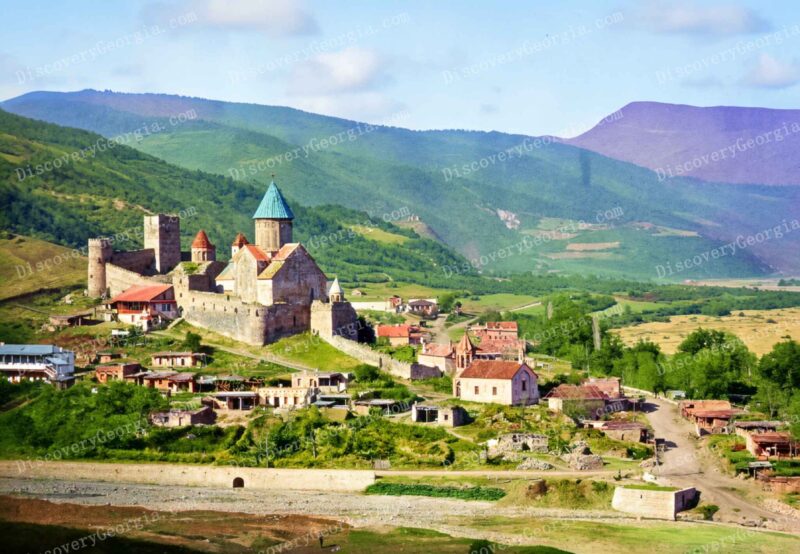


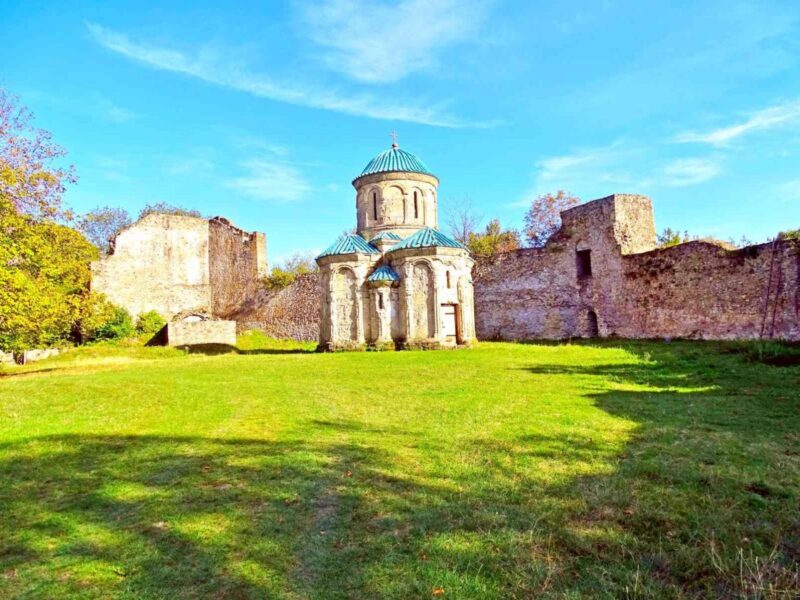


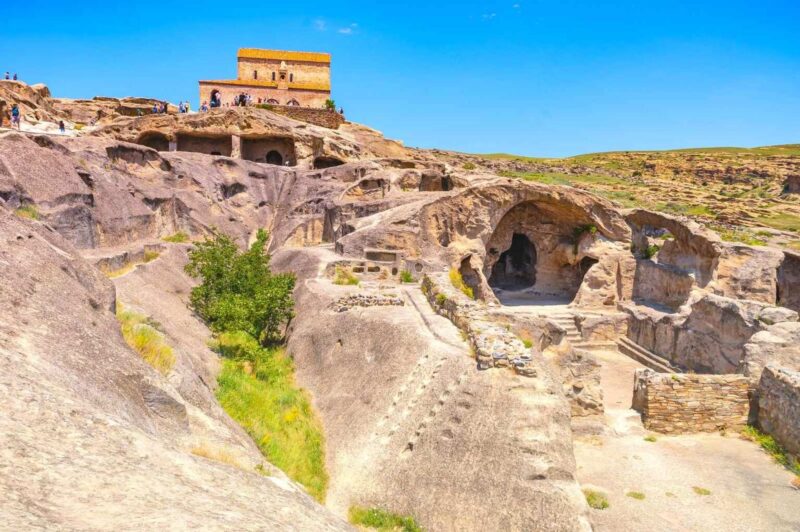

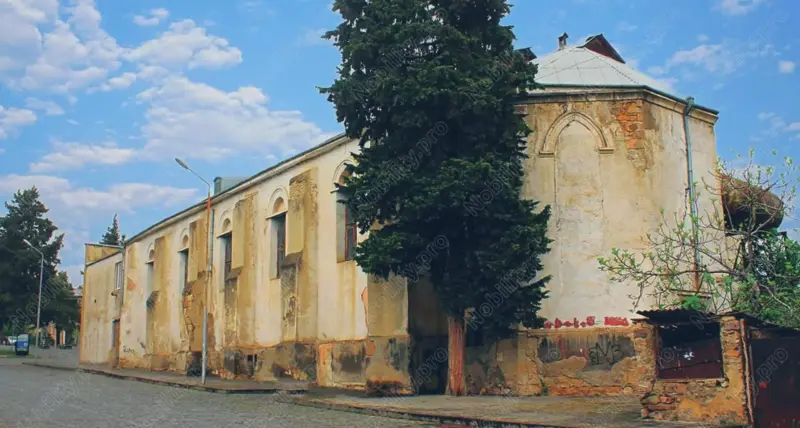
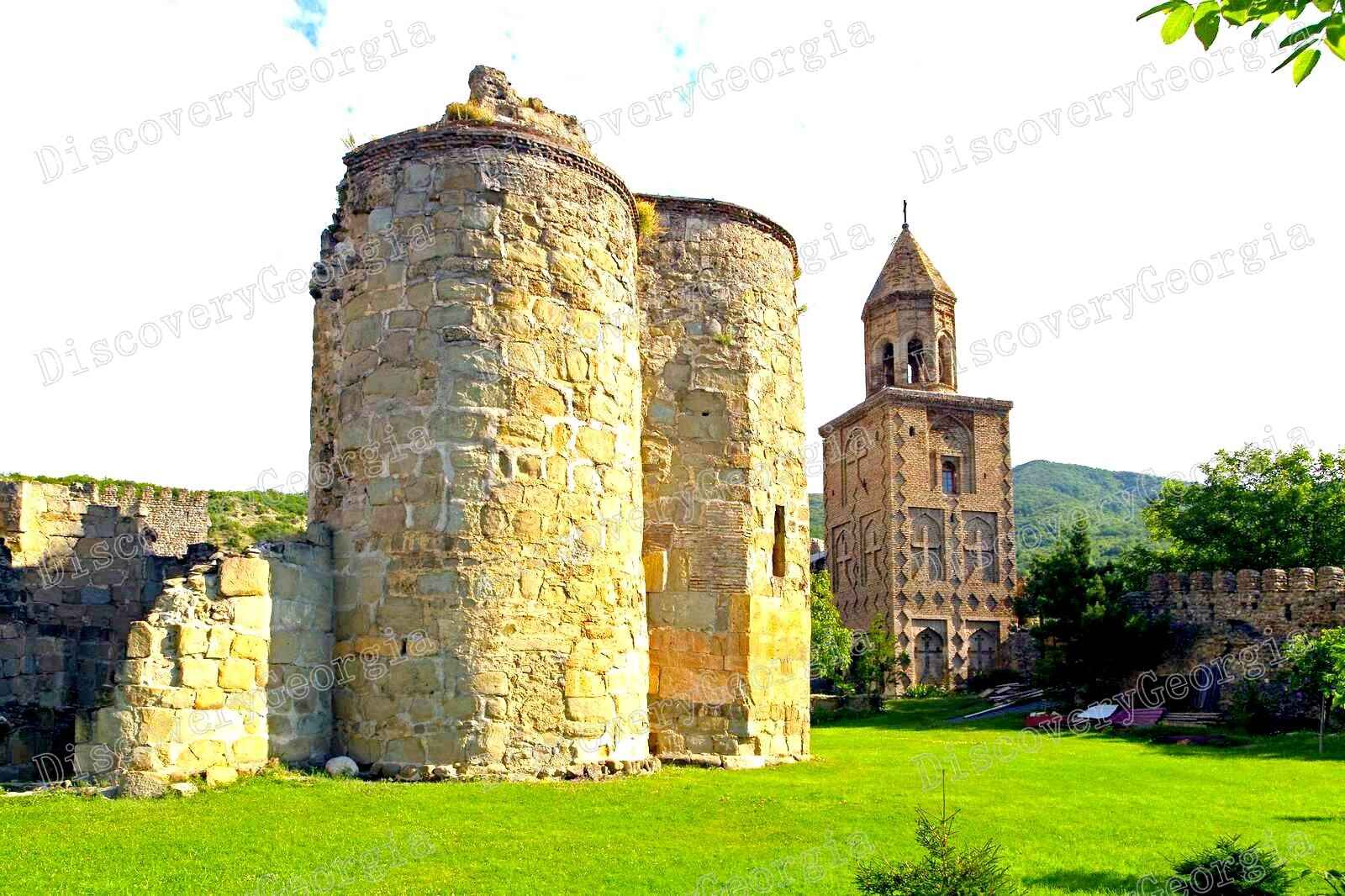
Mtskheta city – Ancient capital of Georgia (Iberia), one of the most ancient cities-fortresses in Georgia. Located on the Mtkvari (Kura) River and the Georgian Military Road, it is only 16 km from Tbilisi. Founded in the first millennium BCE, it was the capital of ancient Iberia between the third century BCE and fifth century CE. It was conquered by the Roman General Pompey in 65 BCE.
The richest archeological material testifies that Mtskheta was the important trading city on a Silk Road between the Caspian and the Black seas. This ancient settlement always was the spiritual center of the country. Long ago there were the statues of pagan gods, and after the adoption of Christianity it became a stronghold of Christian belief in Georgia.
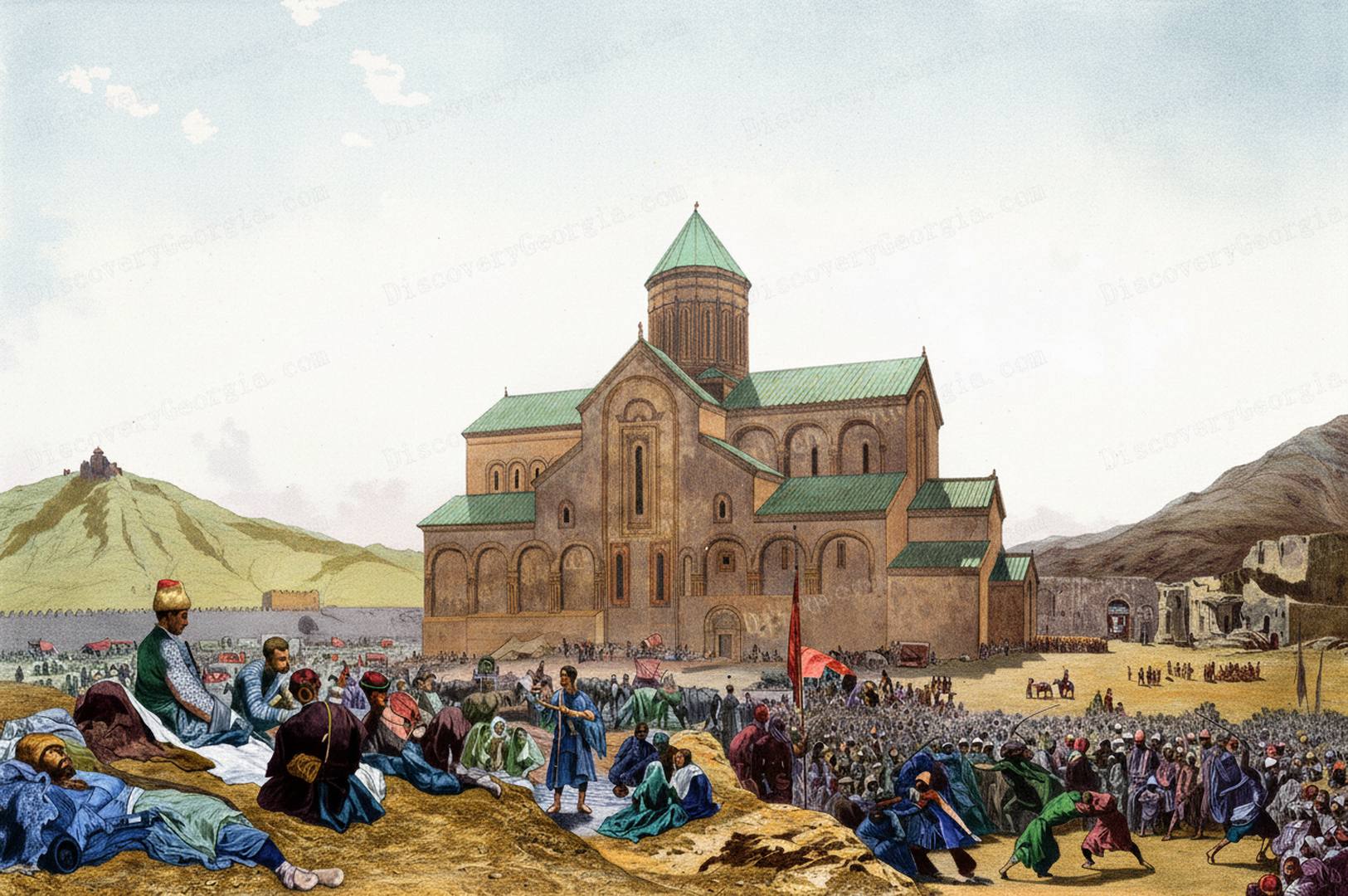
Although King Vakhtang Gorgasal moved the capital to Tbilisi, the former capital remained the religious center of the country. The Svetitskhoveli Cathedral served as the see of the Archbishop of Mtskheta and Catholicos of All Georgia as well as the royal burial chamber where the remains of Kings Vakhtang Gorgasali, Erekle II, and other rulers rest.
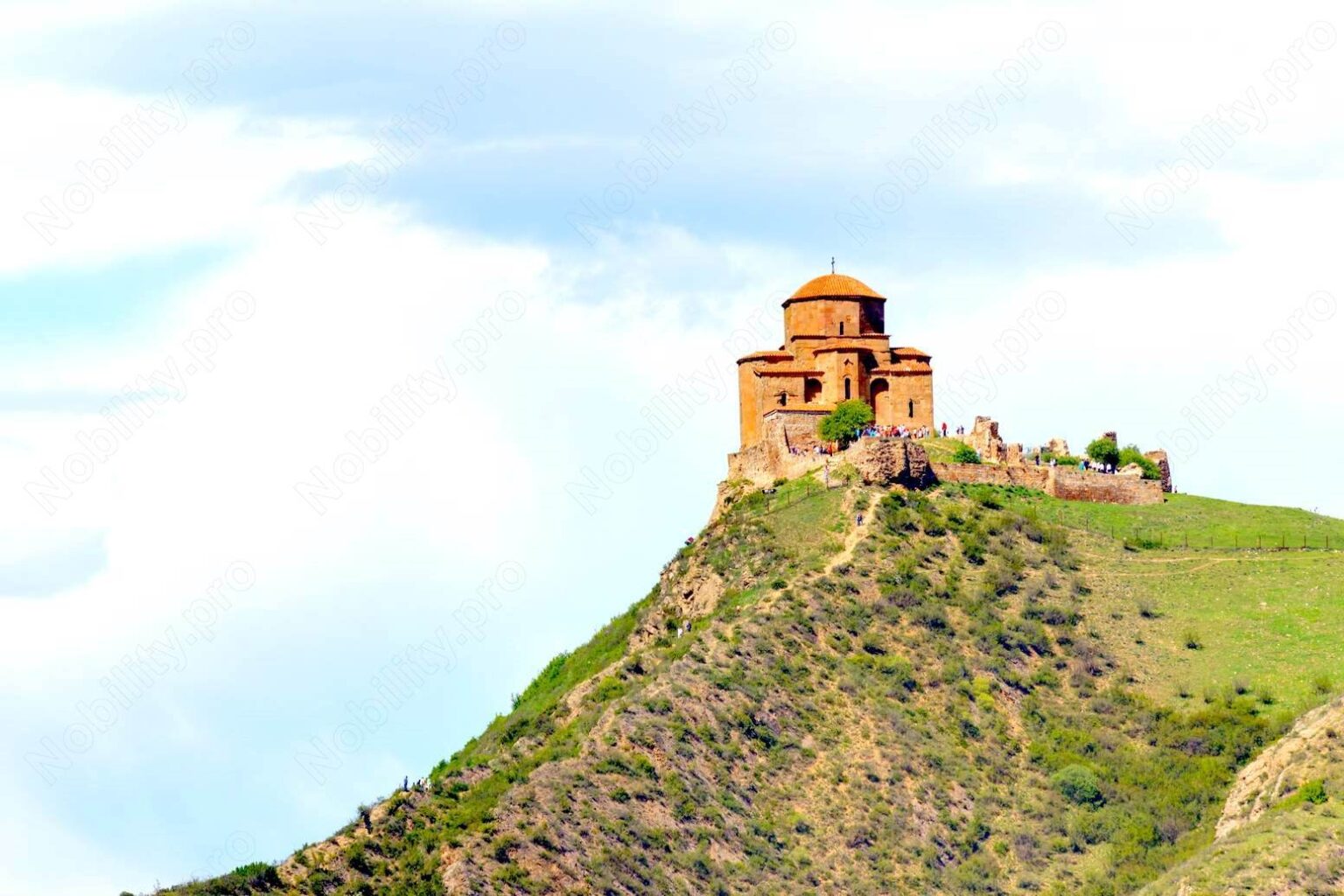
The area contains many historical monuments, including the famous Jvari Church (6th century) overlooking the town from the nearby mountains, the ruins of the Armazis-tsikhe acropolis (first millennium BCE) and fortress (3rd century BCE), the Samtavro Monastery (11th century), and the remains of the Bebris Tsikhe fortress (14th century).
Mtskheta is a museum in an open-air, the most part of its constructions are listed by UNESCO among the world’s cultural heritage.
Mtskheta City and Near Mtskheta Sights
In the Center of Mtskheta
Svetitskhoveli Cathedral — The 11th-century royal cathedral where the Robe of Christ is buried.
Samtavro Monastery Complex — A spiritual center that houses St. Nino’s sacred bramble bush and the royal tombs of King Mirian and Queen Nana.
Mtskheta Archaeological Museum — A museum in the city center preserving ancient gold and artifacts of the old capital.
Antioch Church — A small 4th-5th century church located at the confluence of the Mtkvari and Aragvi rivers.
Getsemania Church — A historic site marking where the Holy Tunic was first brought to Georgia.
Near Mtskheta
Jvari Monastery — A 6th-century church on the mountain peak with a panoramic view of the river confluence.
Shiomgvime Monastery — A 6th-century monastic complex in a limestone canyon, founded by one of the Assyrian Fathers.
Armaztsikhe-Bagineti (Armazi) — The ancient royal acropolis featuring pagan temples, Roman baths, and the seat of the Pitiakhshs.
Zedazeni Monastery — A 6th-century monastery on Zedazeni mountain, founded by St. John of Zedazeni.
Bebris Tsikhe — A medieval fortress on a cliff that once guarded the northern entrance to Mtskheta.
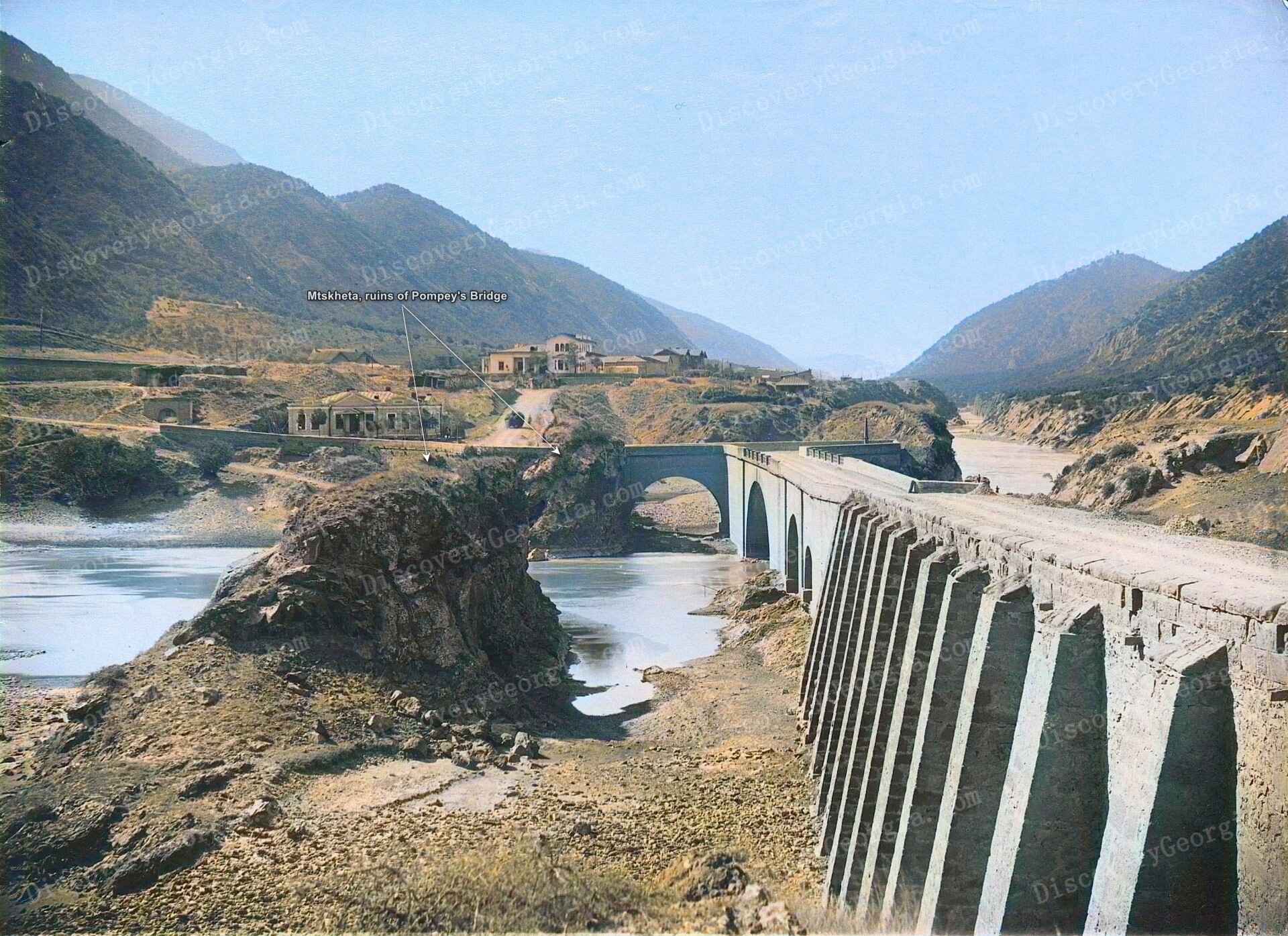
Pompey’s Bridge — The 1st-century BC Roman bridge ruins, visible in the riverbed near the city entrance.
Mukhatgverdi Archaeological Site — An ancient burial ground and site providing insight into early Iberian culture.
Armazi Fortress — A high-mountain military fortification located deeper in the Armazi valley.
Olga’s Convent — A small nunnery situated on the mountain slope overlooking the railway station.
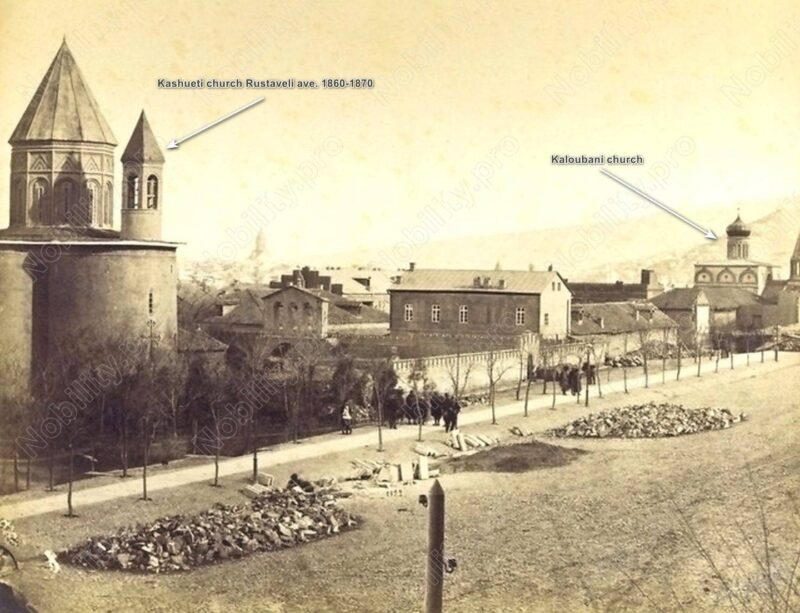
Kaloubani St. George Church — A small, historical hill church overlooking the road to the ancient capital.