
 14 km
14 km 



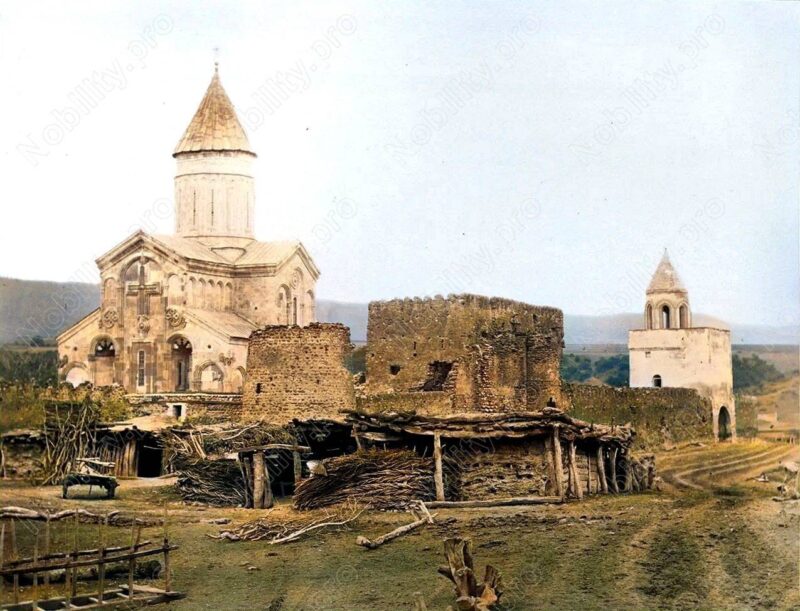







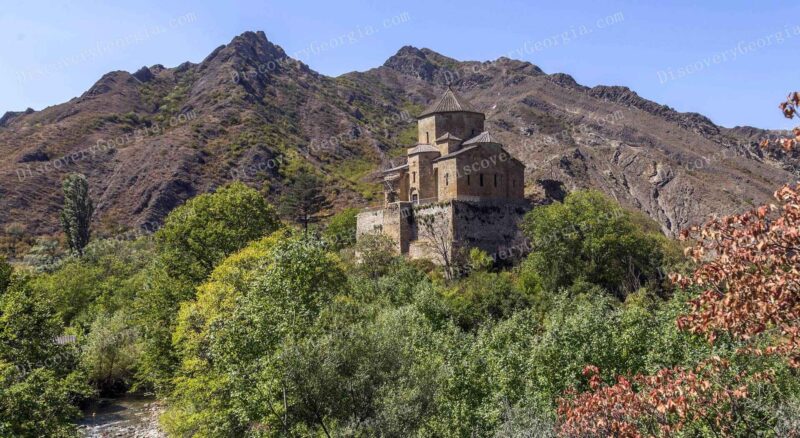




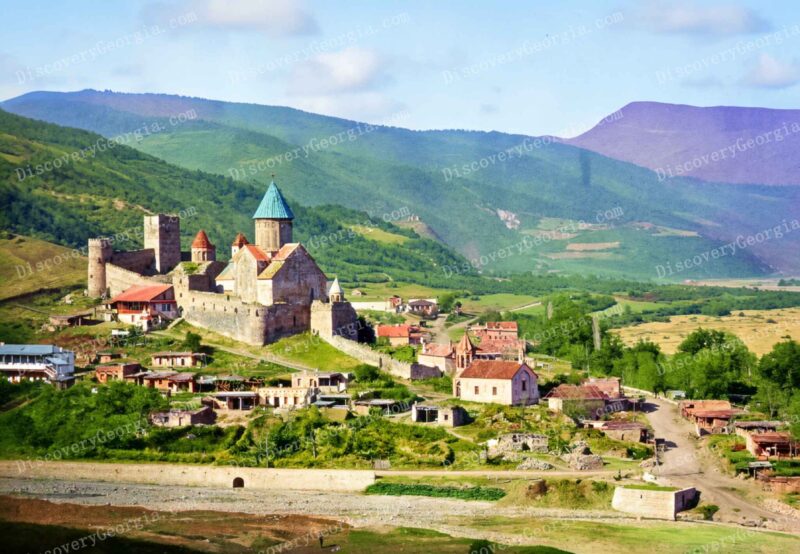
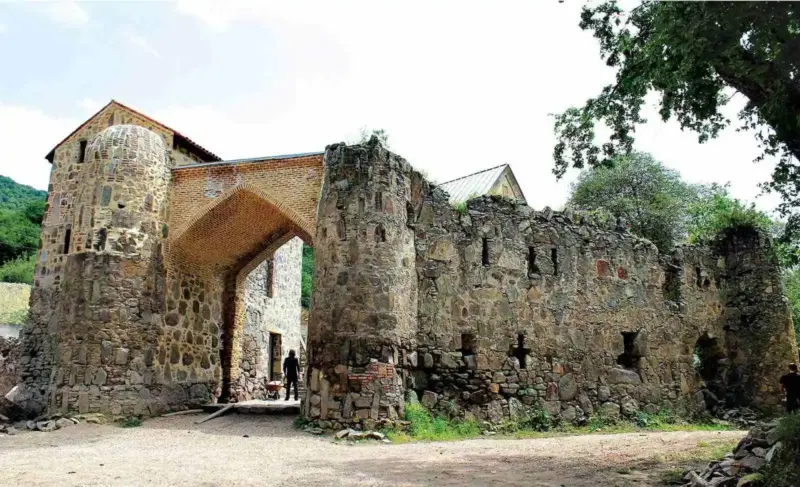
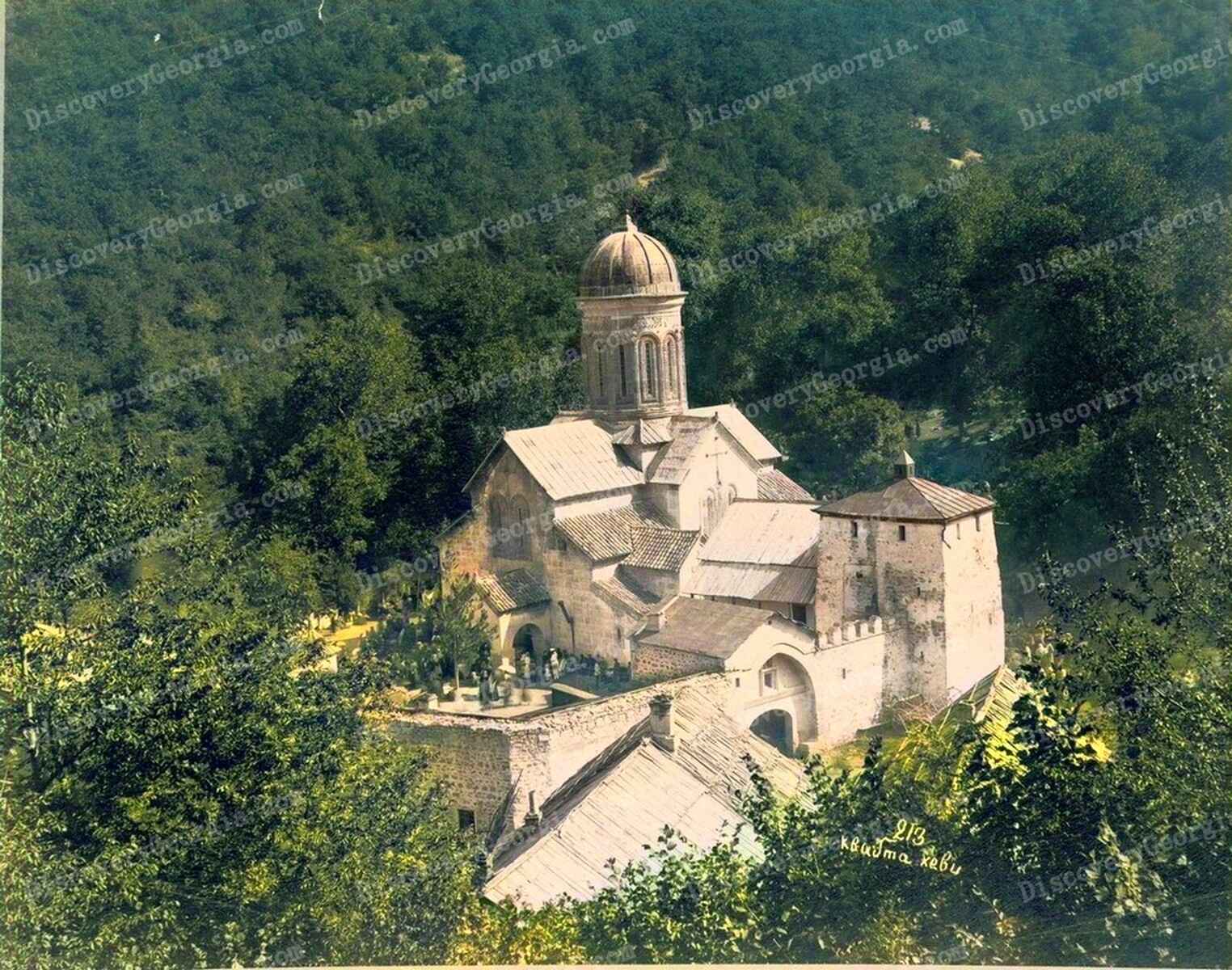
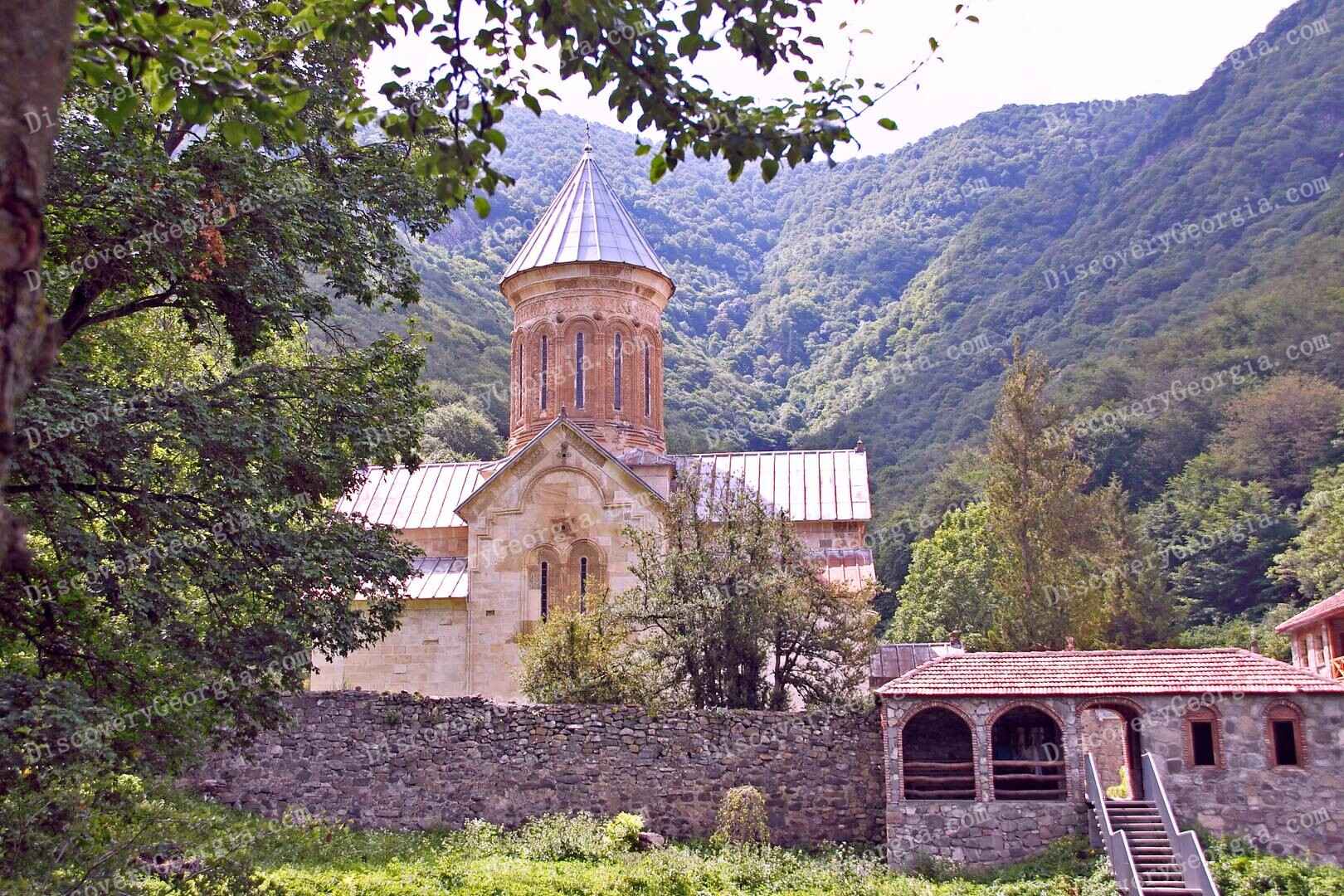
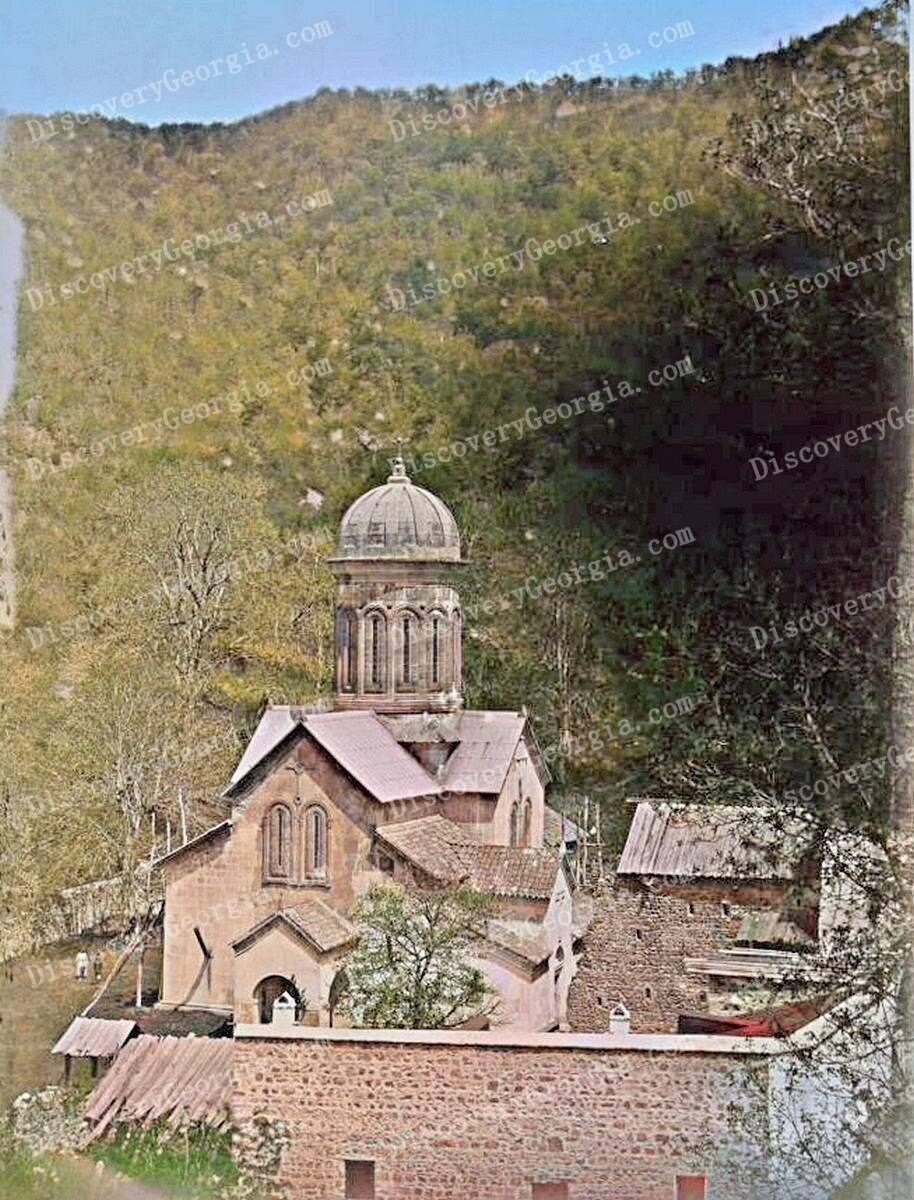
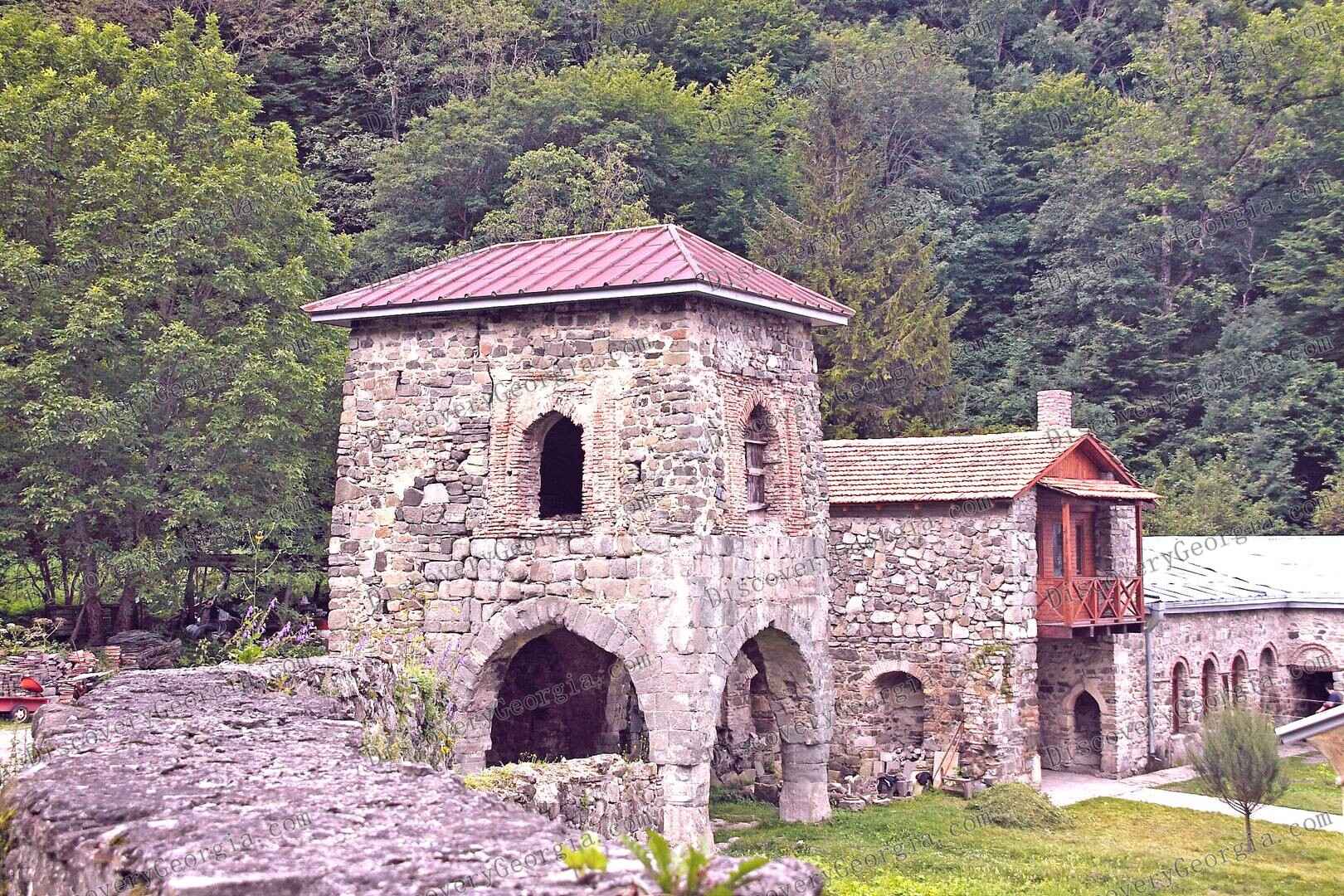
Kvatakhevi Monastery of the Dormition of the Holy Virgin is located in Kaspi Municipality, deep in the Kavtura Gorge, upstream of the river, in proximity to Tsinarekhi Village. Several constructions have been erected here, all from different time periods. For instance, the tower dates back to the XVII-XVIII centuries, the refectory and residential buildings are obviously from the XIX century, a bell-tower was built in 1872, and the central structure of the complex—the Mother of God domed church—was built in the XII-XIII centuries, during the golden era of Georgia’s history, the so-called Queen Tamar’s Epoch.
Kvatakhevi Monastery is renowned for its architectural grandeur. The monastery measures 19.7 meters in length, 10.7 meters in width, and stands approximately 32 meters high to the top of the dome cross; it is supported by four octagonal pillars and adorned externally with intricate stone carvings. Its capitals, crafted in exquisite Byzantine taste, are truly magnificent. Inside the church, the walls still bear traces of ancient, faded frescoes. However, the gilded paintings on the vaults have been preserved, adorned with Byzantine ornaments that are beautifully highlighted in shades of green and blue.
Kvatakhevi Monastery also once housed an exceptionally rich library, which the monks managed to hide in a nearby cave for protection. Among the surviving historical documents from this collection, the oldest dates back to 1432.
It is a representative example of a specific group of Georgian churches with a “recorded cross” configuration. This particular church, with its elevated proportions and supporting columns, has a layout that is close to a square. The interior is characterized by a striking interplay of lower and higher sections, creating a transition from brightly illuminated spaces to areas where light fades almost into twilight.
The general simplicity of the exterior is enriched by floristic fretwork cut into the curved surfaces of the stone, coupled with large decorative crosses, elegant arcades, and a cornice embossed with intricate carvings. The structure is crowned with a dome that rests on a drum faced with profiled slabs and frames adorned with detailed stonework.
The end of the XIV century is the most dramatic period in the history of Kvatakhevi Monastery, when the soldiers of Tamerlane massacred the whole community of nuns. Before Tamerlane’s invasion, the monastery had been a convent for women. After the conqueror exterminated the nuns, it was converted into a monastery for monks. From that time on, according to an established custom, no woman had the right to enter not only the church itself, but even the monastery walls.
The significance of the monument’s restoration carried out in 1854 is well worth mentioning. Although the sphere-shaped dome arranged upon the drum initially turned out to be incompatible with the church’s style (a defect later corrected during the second major round of restoration conducted in the 1970s), all damaged sections of the coating and profiles were carefully restored with new, plain slabs. By leaving these new stones free of fretwork, the XIX-century restorers correctly applied a methodology recommended by modern best practices in architectural conservation.