 10 km
10 km 
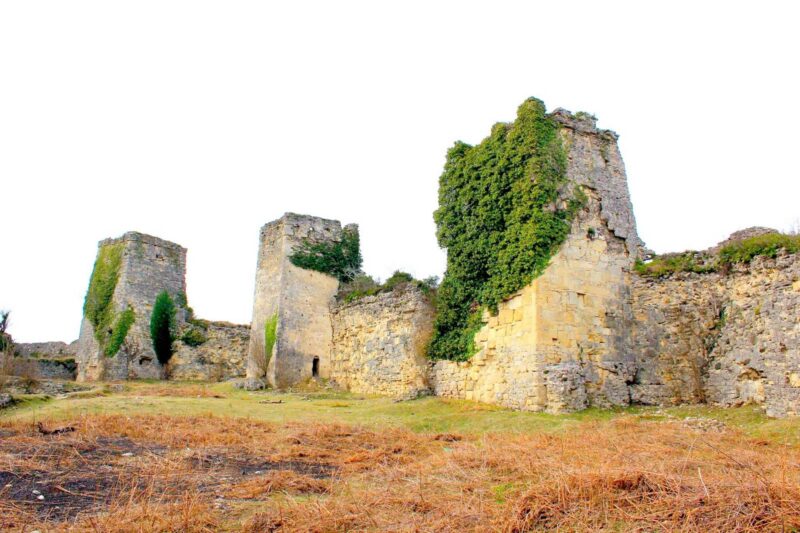


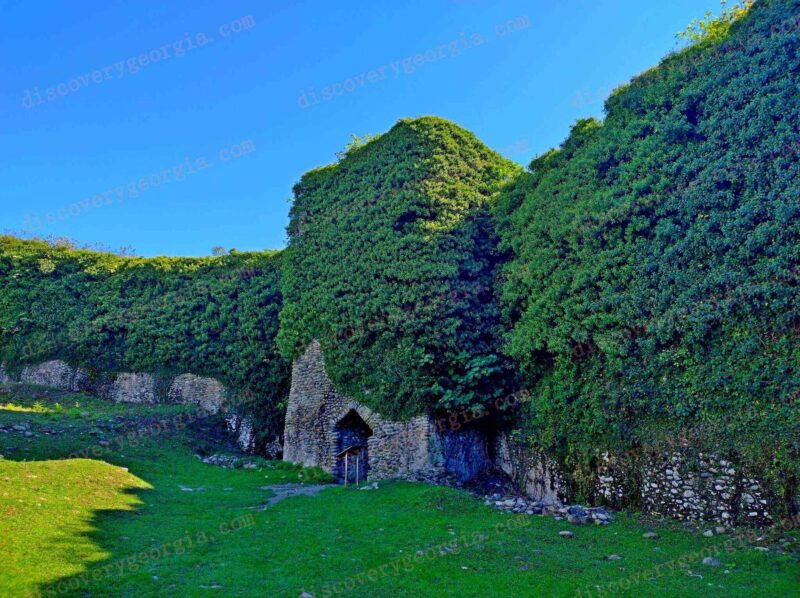

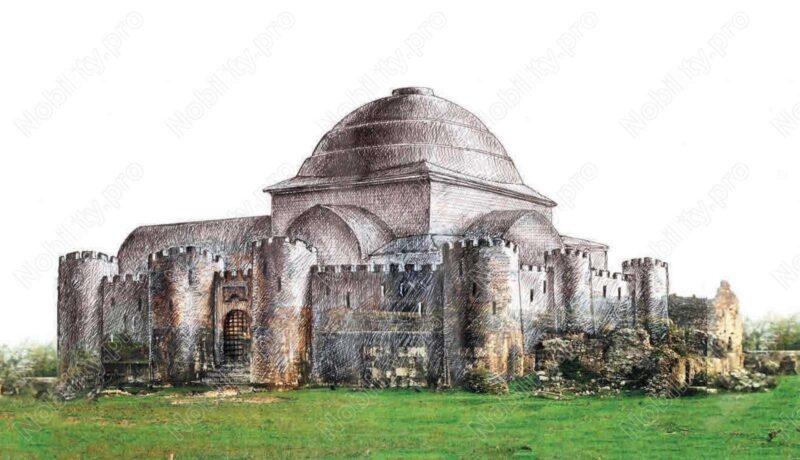


Shkhepi Fortress, also known as Shkheti Fortress, is located in the Samegrelo region, in the village of Shkhepi of the Senaki Municipality, on one of the hills of Unagira Mountain, from where the Colchis Plain and the mountains of Guria-Adjara are clearly visible.
A section of the Silk Road, which headed from the Black Sea coast towards the east and represented an important trade route, passed near the fortress.
The fortress was built in the 4th century, during the period of the Kingdom of Egrisi (Lazica). Initially, it was small in size, then it expanded several times and took its present form.
According to the report of the French traveler Jean François Gamba, the fortress could have been built by the Genoese to protect trade routes, although this is only one of the opinions.
The dimensions of the fortress are approximately 58×20 meters, it has four towers and a lower-upper courtyard.
In the upper courtyard, the remains of the church and a water pool are preserved. For water supply, an additional water pipe was laid later.
Outside the fortress, there is a well-like pit about 6 meters deep, the purpose of which is exactly unknown — according to one opinion, it is related to water supply, and according to another version, it could have had the function of a prison.
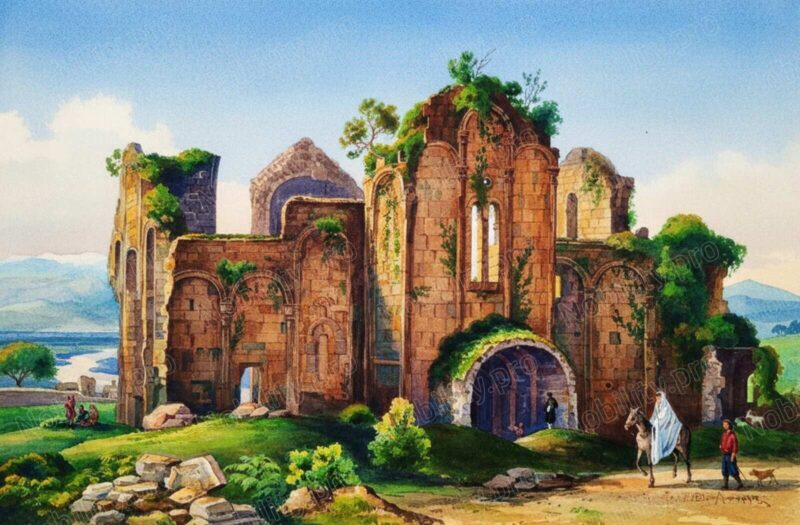
According to the drawing of the French traveler Dubois and Vakhushti’s reports, there was a palace in the fortress, which belonged to the Dadianis.
There was an inscription on the entrance doors of the fortress: “This tower, Karis Tvali, was built by Shedan, may God forgive him.” According to researchers, it is connected to Bedan Dadiani, a figure of the 13th century.
Several historical facts are connected to the fortress. Levan Dadiani, the son of Giorgi, was imprisoned in the fortress, who tried to escape from the fortress, jumped from the rampart, and died. Also, King Leon of Imereti, who died in captivity.
During the archaeological excavations conducted in 1978–1979, various items were discovered, including flintlock rifle components, which are kept in the National Museum today.