 2 km
2 km 

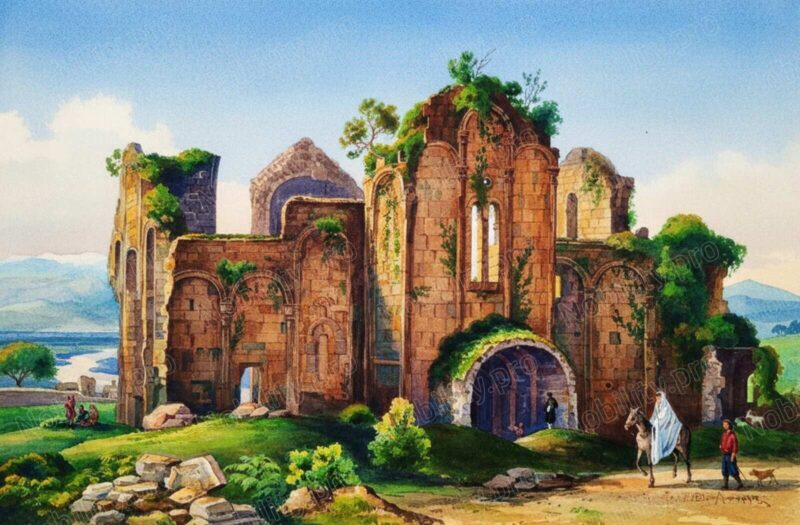
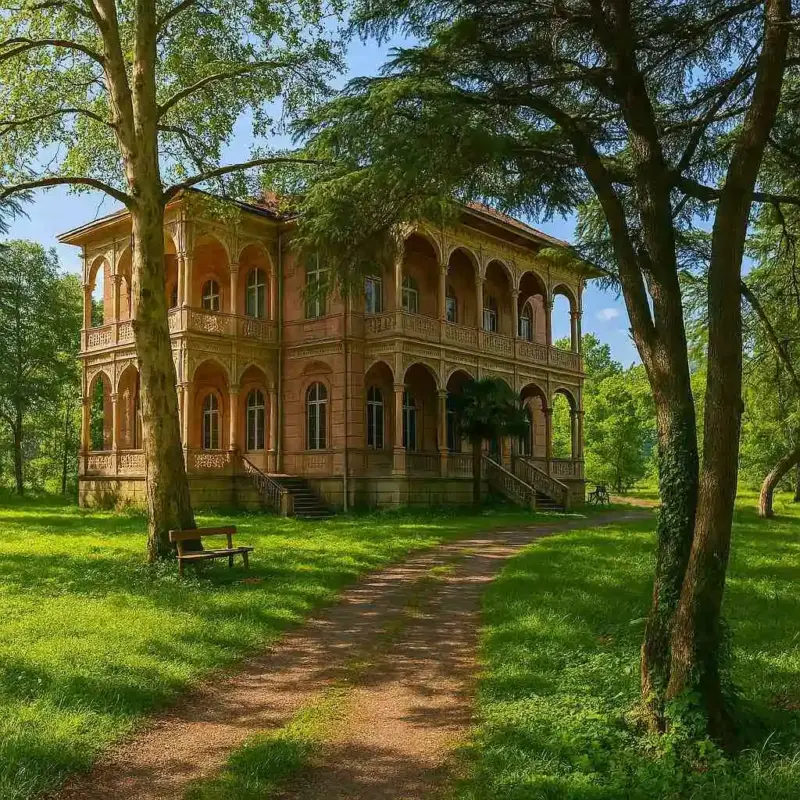

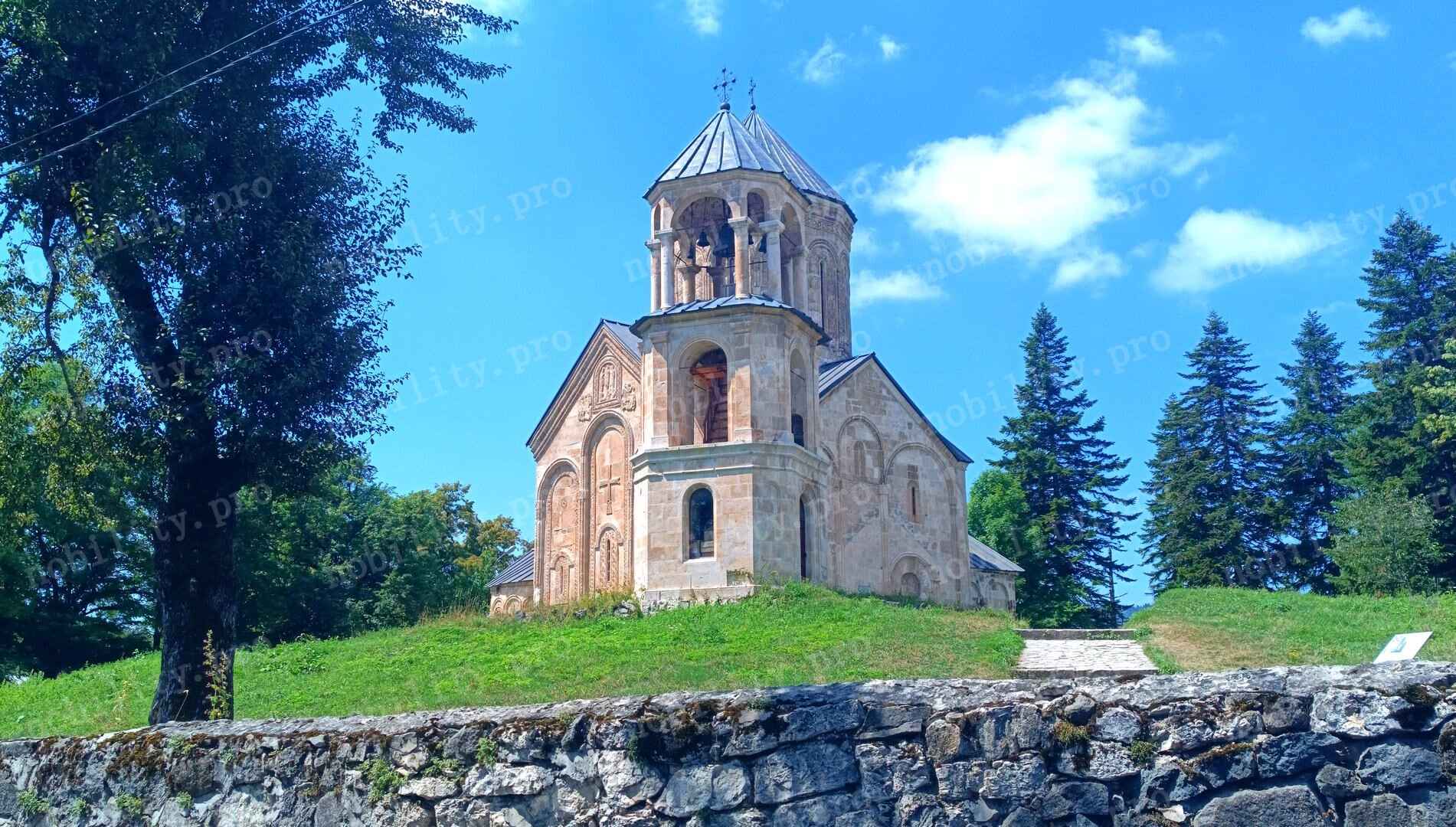




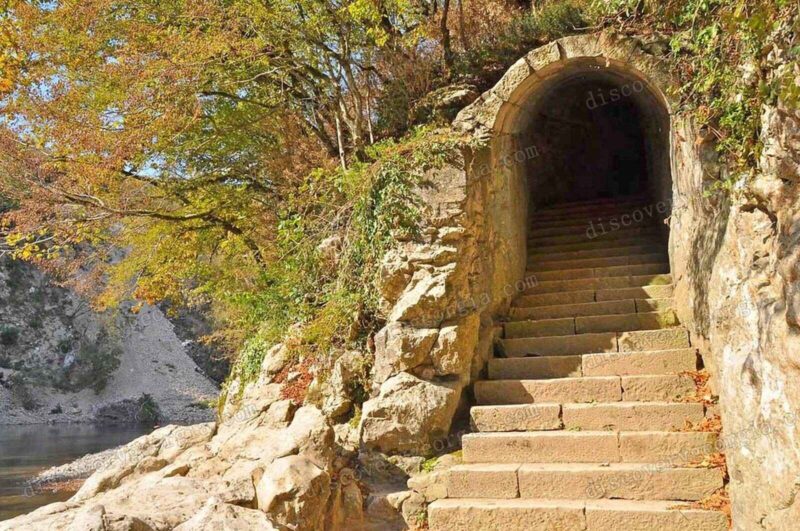


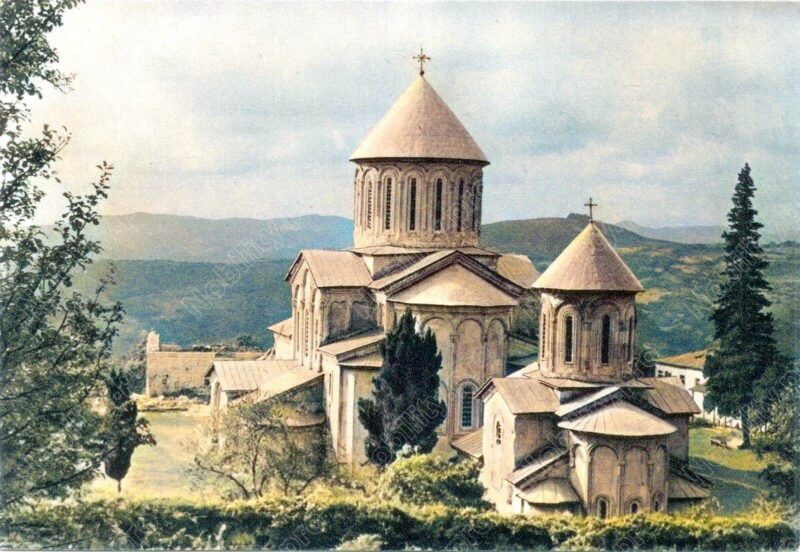
Motsameta Monastery sits on a high cliff above the Tskhaltsitela River Gorge, its towers, churches, and small stone dwellings perched dramatically at the edge of a sheer rock face. Far below, the river winds through a deep green ravine, and the monastery’s silhouette stands out sharply against the wooded hills that surround it — a view often described as one of the most striking in the region for its beauty and unusual setting. The site’s location was no accident. Surrounded on three sides by the steep gorge of the Tskhaltsitela (“Red River”), the monastery was naturally almost impregnable, and its defenses were reinforced further by stone towers, two of which still stand today. Built along the narrow crest of the cliffs, the complex leaves little room for anything beyond its essential structures — there is no space for gardens or open courtyards, and in places the ground gives way to sheer drops just a few steps from the buildings themselves.
Long before the monastery took its present form, a village and a church already existed on this site as early as the 4th century. The name ‘Motsameta’ derives from the Georgian word for martyrdom. In the 8th century, the region was ruled by two brothers — David and Konstantine Mkheidze. Around 720–730, during the invasion of the Arab conqueror Marwan ibn Muhammad, known as “Marwan the Deaf,” the brothers were captured by the invaders, tortured, and thrown into the river for refusing to renounce their faith. According to tradition, their blood stained the water crimson as they were cast into the river, which is why it came to be known as the Tskhaltsitela — the “Red River.” They were later pulled from the water and buried in an ancient burial crypt, above which stood the half-ruined Church of the Annunciation.
In the 11th century, King Bagrat III built a monastery on the foundations of the destroyed eighth-century church in honor of the two brothers, now national heroes and saints in the Georgian Orthodox Church. Their tomb rests on two carved lions at the top of a side altar in the church. The lions are connected with the legend of David and Konstantine Mkheidze, for it is believed that they appeared to bring the bodies of the brothers up from the river to the church. Believers also hold that if you walk three times through the small passage beneath the saints’ tomb without touching the walls, your prayers will be answered.
From early on, the monastery attracted considerable interest, drawing a number of notable guests. Among them were representatives of the British aristocracy: Oliver Wardrop, the distinguished British diplomat, writer, and translator, and his sister Marjory, a public figure and great friend of the Georgian people.
In 1888, the monastery was visited by Nicholas II, the last emperor of Russia, along with his family. Notably, the emperor and his entourage walked on foot from the train station all the way up to the monastery. There, they were greeted by Archimandrite Bessarion and the monastery’s priest, who presented the emperor and his family with an icon of the saints David and Konstantine as a gift.
In 1923, the Cheka (the Soviet secret police) came into the church and seized the bones of the two saints. Thanks to the devotion of local believers, however, the saints’ remains escaped final destruction and were transferred to the museum in Kutaisi. In 1954, when the monastery became active again, the relics were returned from the museum to the monastery, where they were given a permanent resting place.